Skip to content
💡UNLOCK 10% OFF on your first order! Use GLOW10 at checkout. Elevate your space for less!

Modern Ginkgo Ceramic Chandelier

Availability:
5+ in stock, ready to be shipped
Availability:
5+ in stock, ready to be shipped
Availability:
5+ in stock, ready to be shipped
Availability:
5+ in stock, ready to be shipped
Availability:
5+ in stock, ready to be shipped
Availability:
5+ in stock, ready to be shipped
SKU MHC-06254-01
Original price $595.00 - Original price $1,185.00
Original price
$595.00
$595.00 - $1,185.00
Current price $595.00

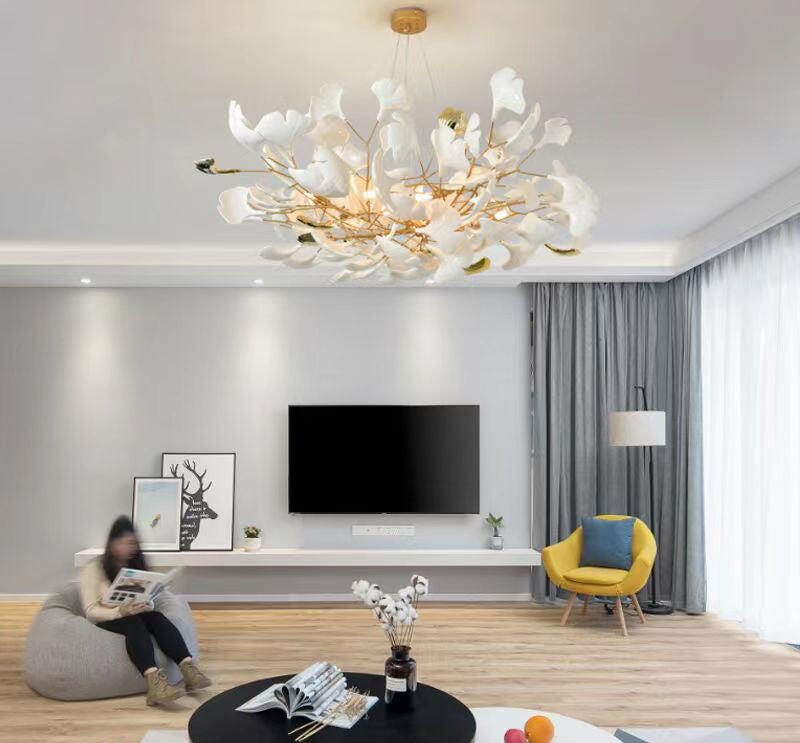
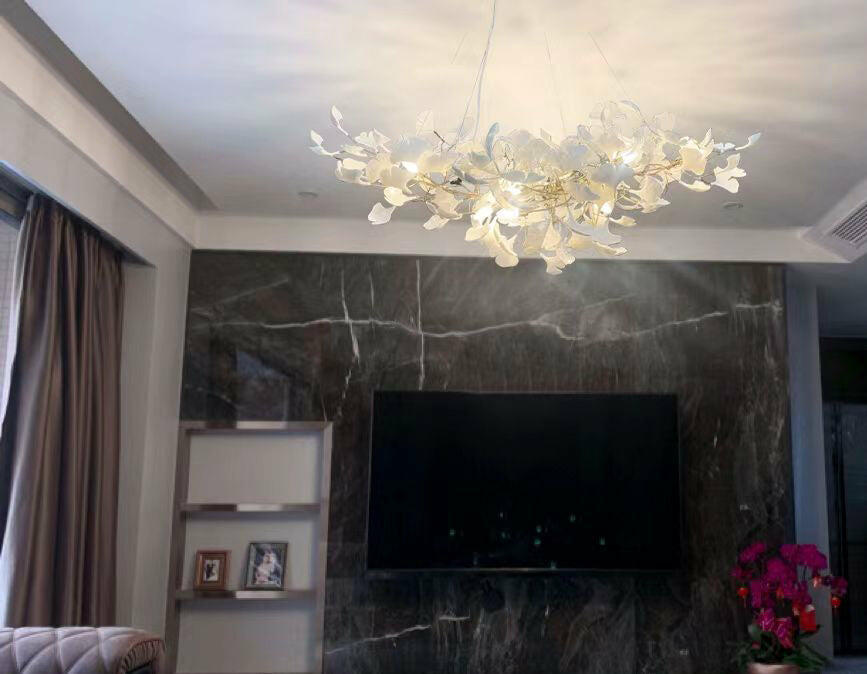
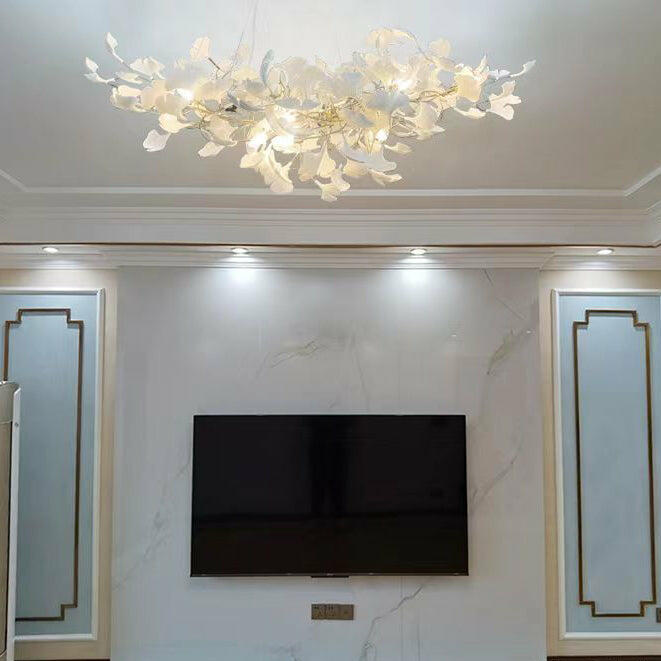
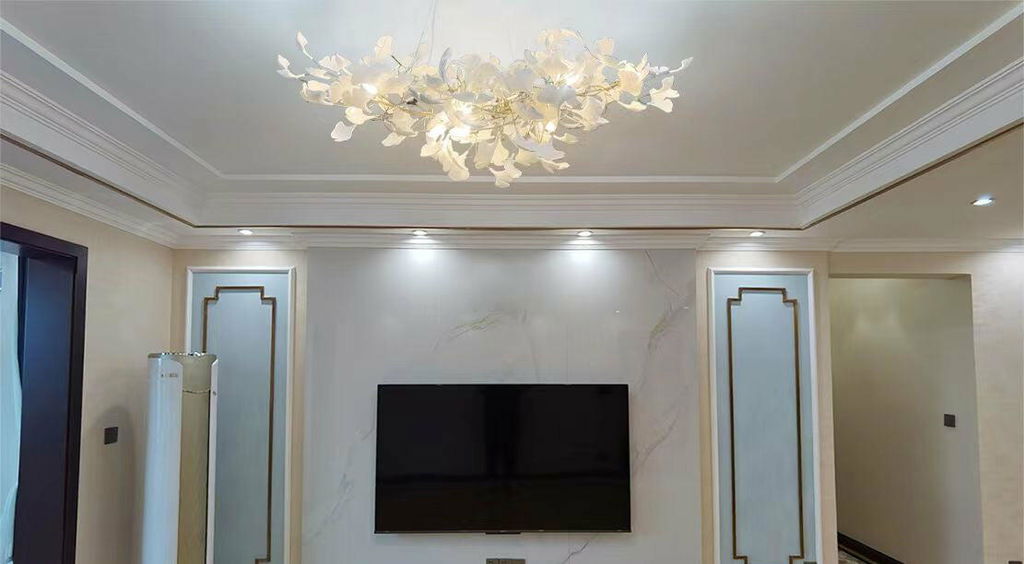
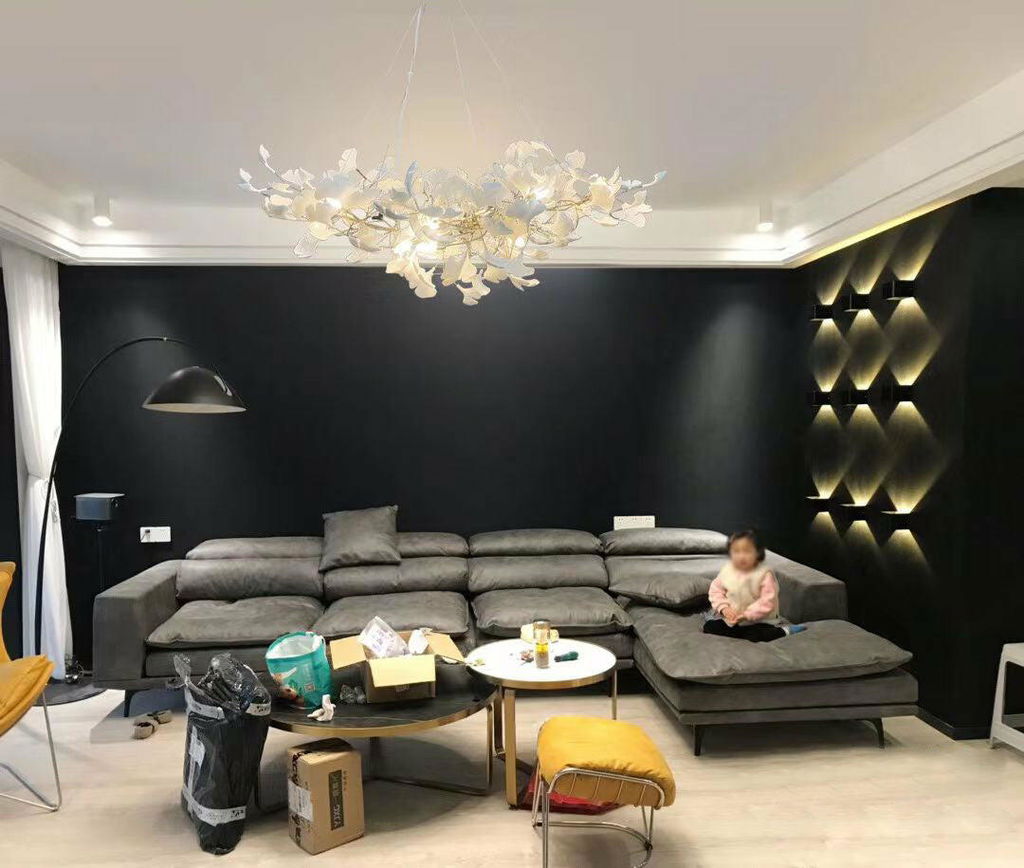
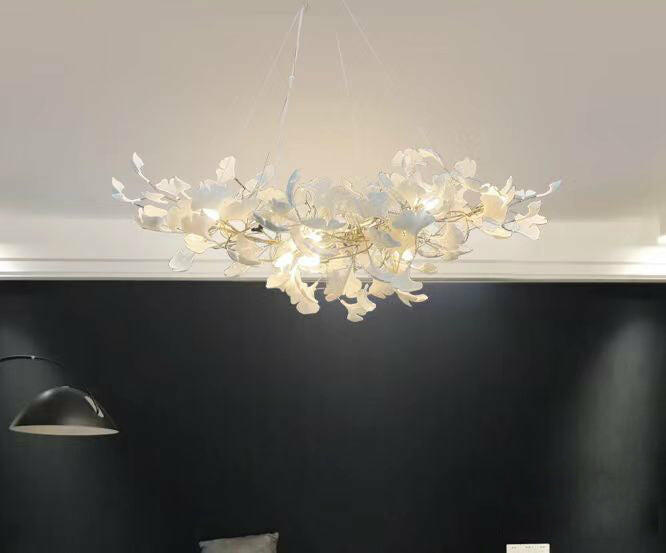
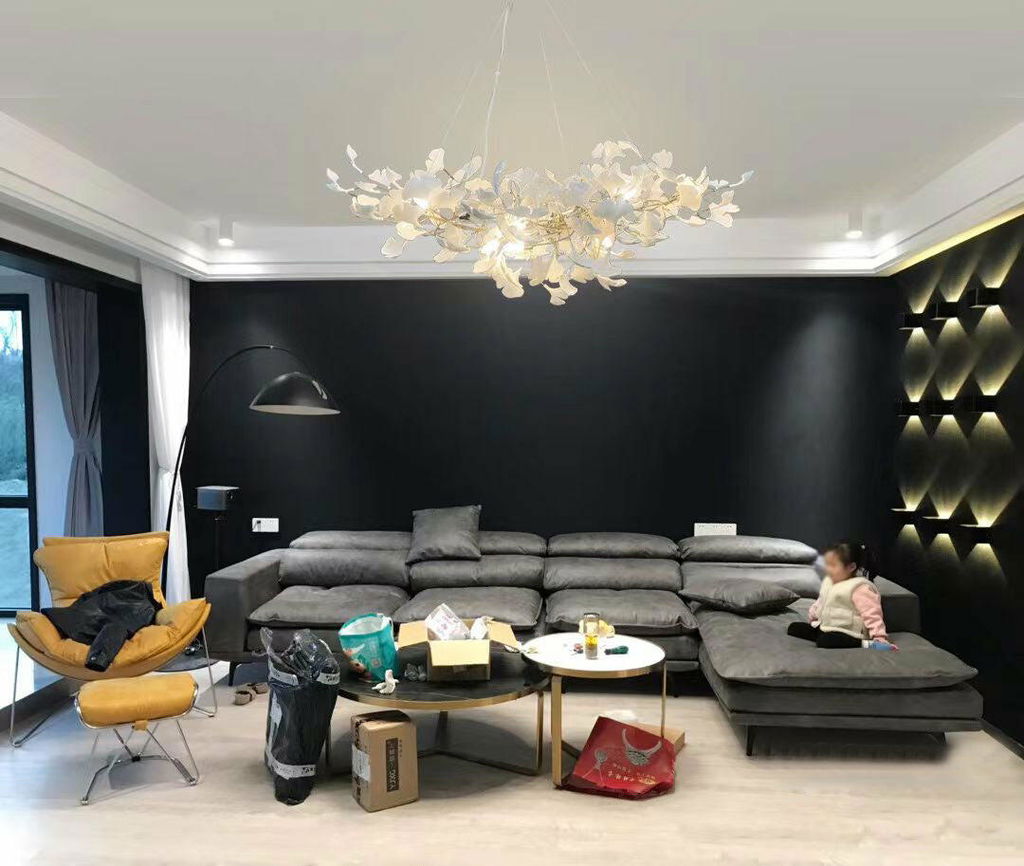
This ceramic ginkgo tree petal chandelier shows its luxurious style in overall design, material, and manufacturing technology. It will stand out among many lighting styles. The gold lamp body is covered with exquisite ceramic petals, which reflects the perfect combination of lighting design and natural plants. The surrounding ceramic petals unfold outward, lifelike. Fine workmanship. Each chandelier is a unique art.

About the Glue Marks on the Ginkgo Leaves:

To ensure the metal accessories remain securely attached during transportation and long-term use, a small amount of glue is applied at the metal interface of each ginkgo leaf. This is a normal part of the production process, designed to enhance product stability and safety.

You may notice slight glue residue on the surface of some leaves. Please note that it is not a quality issue and does not affect the product’s appearance or functionality.

Light Source
  • Requires G9/5W (EU, AU) or E12/14W (US, CAN) bulb. (Not included bulbs)
  • Dimmable with compatible dimming bulbs.
Measurements
  • 8 Heads: L 39.3 x W 17.7 x H 59"
  • 10 Heads: L 47.2 x W 19.7 x H 59"
  • 12 Heads: L 59 x W 21.7 x H 59"
  • Wire Length: 59" (Adjustable overall height)
Features
  • Lamp stand in gold-tone iron with white ceramic leaves.
  • Nickel, Chrome can be customized, if required, you can contact our Team.
  • Compliant with North America, Australia, Europe, and Middle East Certification.
Manufacturer Resources
Specification Sheet Installation Sheet

Payment Security

When something goes wrong with your eligible transactions, Paypal and Bank Buyer Protection has you covered. Get a full refund if an eligible order isn't significantly as described, or doesn't arrive at your doorstep.

A+ Content — Ceramic Lighting Collection
Ceramic Lighting Collection Clay · Glaze · Kiln · Light

Handcrafted Ceramic Lighting

Where clay becomes light.

Every shade in this collection is thrown, glazed, and fired by hand — so the light reaching your room has passed through something made, not molded.

Kiln-fired stoneware Hand-applied glaze Small-batch made
Lit ceramic pendant lamp in a dim room, glow visible through shade

No two pieces leave the kiln the same. That's not a flaw in the process — it's the point.

Firing Curve

Two Firings
Room temp Bisque Peak 999°C · Cone 06 1,222°C · Cone 6

Forming

Thrown or slip-cast

Drying

Leather-hard to bone-dry

Bisque

999°C · Cone 06

Glazing

Dipped or hand-brushed

Glaze Fire

1,222°C · Cone 6

Cooling

~12 hrs kiln cooling

From Clay to Light

The Making Process

Six stages, each done by hand, from raw clay to a tested, finished lamp. Sequence matters — skipping or rushing any stage changes how the piece looks, feels, and glows.

1
Hands wedging clay in a spiral motion, working out air bubbles

Stage 01 · Raw Material

Choosing the Right Clay for Each Piece

Every lamp starts with a specific clay body — porcelain for parts that need to glow, stoneware for bases that need to bear weight. The clay is hand-wedged in a spiral motion to work out air pockets, which would otherwise crack the piece during firing.

Hand-wedgedAir removed
2
A shade body being thrown on the wheel, or slip poured into a plaster mold

Stage 02 · Forming

Thrown on the Wheel, or Slip-Cast

Round forms are thrown on the wheel — centered and drawn up by hand with the help of water. Shades with a more sculptural or asymmetric form are slip-cast instead: liquid clay is poured into a plaster mold, which draws out moisture until the piece releases cleanly.

Wheel-thrownSlip-cast
3
A piece being trimmed on the wheel, then left to dry slowly under loose plastic sheeting

Stage 03 · Trimming

Trimmed Leather-Hard, Dried Slowly

Once the piece firms up to leather-hard, it's trimmed on the wheel to clean up the foot ring and even out wall thickness. It then dries under loosely draped plastic for days to weeks — slowly enough that one side doesn't dry faster than another and warp the form.

Hand-trimmedDried days to weeks
4
Greenware loaded into the kiln, ready for its first firing

Stage 04 · First Firing

The First Firing, Before Glaze

Fully dried greenware goes into the kiln for its first firing, with the temperature climbing slowly to about 999°C. This burns off any remaining moisture and organic matter, hardening the clay into bisque — sturdy enough to handle, yet porous enough to still absorb glaze.

999°C · Cone 068–12 hr firing cycle
5
Glaze mixed in-house, then dipped or hand-brushed onto the piece

Stage 05 · Surface

Mixing, Applying, and Wiping the Glaze

Glaze is mixed in-house from silica, flux, and mineral oxides, then applied directly to the bisque by dipping, pouring, or hand-brushing. The foot ring is wiped clean or waxed beforehand — otherwise glaze there would fuse the piece to the kiln shelf during firing.

Dipped or hand-brushedFoot ring kept glaze-free
6
The finished piece after glaze firing, wired and tested under power

Stage 06 · Glaze Firing

Vitrified, Wired, and Tested

The second firing climbs to about 1,222°C — hot enough to melt the glaze into glass and fuse the body itself into dense, watertight ceramic. Once cooled, each piece is wired, fitted with hardware, and tested under power before it's packed.

1,222°C · Cone 6100% power-tested

Why Ceramic

What the Material Gives You

Glow, Not Glare

Ceramic softens light far more than glass or plastic shades, giving a warm, even glow instead of a harsh bulb-bright glare.

Kiln-Fired, Built to Last

Fired stoneware is heat-resistant and durable — made for everyday use, not just for looking at.

One of a Kind

Hand-applied glaze creates natural variation in color and texture. The one that reaches you is the only one like it in the world.

At a Glance

Handmade Ceramic vs. Mass-Produced Lighting

Injection-molded shades are built for speed and consistency. We're built for character — here's an honest comparison of the trade-offs.

Feature This Collection Typical Mass-Produced
Shade material Kiln-fired stoneware Injection-molded plastic or resin
Light quality Soft, even glow Often harsh or uneven
Made by Individual artisans, small batch Automated production lines
Surface finish Hand-glazed, natural variation Uniform spray coating
Uniqueness One of a kind Identical to thousands of others

Two Honest Techniques

Thrown by Hand, or Cast by Hand

Round bases can be thrown on the wheel, spun and shaped by the potter's hands. Shades with a more sculptural or asymmetric form suit slip-casting instead — liquid clay poured into a plaster mold, left until it draws out enough moisture for the piece to firm up and release.

Neither method is a shortcut. Thrown pieces carry the faint spiral texture the wheel leaves behind, honest and unadorned; cast pieces precisely reproduce every detail of the mold. We choose the technique the form calls for, not whichever costs less.

Hand-Thrown

Spiral throwing lines

Slip-Cast

← Mold seam line

Thrown

Every piece unique

Cast

Precisely repeatable form

Fired Together

Same clay, same kiln

Breaking Down the Clay Body

Clay Isn't One Recipe

The clay body matters as much as the form itself — how much light it lets through, how much weight it can carry, how well it holds up to a knock. We choose the right clay for each part, rather than using one body for everything.

01

Kaolin-based

Porcelain

Kaolin 50% Feldspar 25% Quartz 25%

Fully vitrified, porcelain fires to a bright white with a faint translucency — thin-walled areas glow when lit from within, rather than just reflecting light off the surface.

Best for shades and fittings where the glow-through effect matters most

02

Ball clay blend

Stoneware

Clay 60% Feldspar 20% Grog 20%

A denser, less refined clay body — it vitrifies at a similar temperature but stays opaque, with a warm tone throughout. The grog mixed in resists cracking and gives each piece real heft.

Best for bases and bodies that need durability and weight

03

Low-fire body

Earthenware

Clay 70% Quartz 20% Iron oxide 10%

Fired at a lower temperature, earthenware stays naturally porous where it isn't fully glazed, showing a warm terracotta tone that peeks through wherever the glaze runs thin or bare.

Best for decorative pieces with an exposed-clay feel

Shipping Protection

Ceramic Is Fragile — Our Packaging Isn't Casual About It

Every lamp goes through four layers of packaging before it leaves — starting with a foam liner shaped to fit the piece, then layer after layer of cushioning against shock and vibration in transit, finished with a double-walled reinforced box.

Corners get their own reinforcement, and the outside of the box is clearly marked fragile and this-side-up, so every hand it passes through in transit knows how to handle it.

Fragile Label
Double-walled box Honeycomb cushioning Custom foam liner The lamp

Four Layers

Cushioned at every layer

Reinforced

Corners strengthened individually

Labeled

Fragile & orientation clearly marked

Glaze Options

One Clay Body, Three Glaze Finishes

The same fired clay body, finished in different glazes — the difference happens at the fifth step in the process, not sprayed on afterward. Each glaze has its own sheen, texture, and level of translucency.

Close-up of celadon matte glaze

Celadon Matte

A soft, semi-matte sage-green glaze that pools slightly deeper in every groove and seam, carrying on the quiet tradition of East Asian celadon.

Close-up of crackle-reaction glaze

Crackle Reaction

An ivory-white glaze formulated to deliberately crackle — as the kiln cools, the surface forms a fine web of hairline cracks, making every piece one of a kind.

Close-up of iron temmoku glaze

Iron Temmoku

An iron-rich glossy glaze that fires almost black where it pools thick, while edges and ridges where the glaze runs thin show through in a warm rust tone.

Celadon Matte Crackle Reaction Iron Temmoku
Translucency ★★★☆☆ Soft, even diffused light ★★★★☆ Bright, glassy translucence ★★☆☆☆ Low translucency, directional glow
Texture Satin matte, glaze pools slightly in recesses Glossy surface, covered in fine crackle lines Glossy surface, rust tone shows on raised edges
Best for Quiet, minimalist and Japandi-style spaces Cottage, coastal and vintage-style spaces Moody, texture-rich modern-traditional spaces

Pre-Shipment Testing

Checked Piece by Piece, No Blind Spots

This is the standard every single lamp has to meet before it leaves the workshop — not just a sample from the batch.

01

Tap Tone Test

Every fired piece is tapped and listened to — a clear, bell-like ring confirms full vitrification. A dull or muffled sound gets it pulled, no exceptions.

02

Wall Thickness Check

Finished pieces are checked for even wall thickness, since uneven walls are the most common cause of cracking after glaze firing.

03

Glaze Inspection

Every glazed surface is checked under raking light for pinholes, hairline flaws, or thin spots, and has to pass clean before moving on.

04

Wiring & Safety Test

Once the socket, wiring, and hardware are assembled, every unit is powered on and tested before it's packed.

Everyday Care

Glaze Only Gets Richer With Time

Fired ceramic is stable and long-lasting — but the right care keeps the glaze looking its best and lets the piece stay safely in daily use for years.

Dusting

Wipe the surface weekly with a dry soft cloth or feather duster — glaze tends to collect dust more readily than a sprayed-on finish.

Moving It

Always support the base from underneath when moving it — never grip the shade or fittings, as thin-walled areas can crack under sideways pressure.

Cleaning

Clean the glaze with a barely damp soft cloth and dry it immediately — this matters even more for finishes with fine crackle.

What to Avoid

Avoid bleach, ammonia, or abrasive cleaners — they can dull a matte glaze over time, and may work their way into the fine lines of a crackle glaze.

The fine web of a crackle glaze isn't a flaw — it's a controlled reaction built into the glaze recipe on purpose. Over years of use, its tone naturally deepens, which is exactly the patina these pieces are known for.

Our Promise

Hand-checked by a craftsperson before it ships.

Every lamp is wired and lit before it leaves the studio, checked for even light. If what arrives has a genuine flaw — not natural glaze variation — reach out and we'll make it right.

Clay is a natural, renewable material, and any kiln waste this collection produces is reclaimed and reused rather than thrown away.

Small-batch made · One of a kind

Ceramic Lighting Collection — A+ Content Template

North American certified

Certified to North American safety standards

Fast and Free Shipping

Discover same day shipping
on 1000s of designs.

Expert Customer Service

Fast and friendly help by
phone, chat or email.

Amazing Values, All the Time

Backed by our 120% price
protection policy.

Spatial Lighting Aesthetics

Custom lighting fixtures

We are dedicated to turning your most imaginative ideas into extraordinary reality. Please spread your thoughts freely.

Contact Us